
The trajectory of the automotive industry is shifting rapidly. As we move toward electrification and autonomous driving, the humble vehicle light has graduated from a basic safety requirement to a sophisticated communication device and a key aesthetic differentiator. Modern headlamps and tail lamps are no longer simple housings for halogen bulbs; they are dense ecosystems of LED matrices, LiDAR sensors, adaptive control units, and intricate ventilation channels.
In this high-tech environment, the role of rubber auto parts has evolved from simple hardware to critical component protection. The engineering tolerance for failure is effectively zero. A single compromised seal or a blocked ventilation path can lead to condensation fogging, electronic short-circuits, or total system failure. Consequently, the demand for specialized automotive lamps rubber parts has surged, driven by strict requirements for thermal regulation, hermetic sealing, and production line efficiency.
There is a common misconception that LEDs are "cold" light sources. While they do not radiate infrared heat like incandescent bulbs, the drive electronics and the LED junction itself generate significant localized heat. In modern "slim-line" headlight designs, packing high-lumen output into smaller housings creates a thermal density challenge. If this heat isn't evacuated, it leads to two problems: a shift in the LED color spectrum and a drastic reduction in component lifespan.
Effective thermal management now relies on active airflow strategies, often referred to as the "Chimney Effect," where cool air is drawn in and hot air is expelled.
The Automotive Lamps Black Rubber Hose is central to this ventilation strategy. Unlike rigid plastic tubes, this flexible rubber component accommodates the vibration and thermal expansion differences between the hot engine bay and the cooler lamp housing.
Engineers are increasingly specifying Ethylene Propylene Diene Monomer (EPDM) for these hoses due to its stability. Below is a comparison of material performance data often considered during the design phase:
Continuous Temp Resistance | 70°C | 120°C | 150°C+ |
Ozone Resistance | Poor | Excellent | Excellent |
Compression Set (100°C) | High (Deforms) | Low (Retains Shape) | Very Low |
As lighting systems become more compact, the "High-Temp EPDM" category is becoming the standard. The rubber hose must maintain its cross-sectional shape to ensure consistent airflow volume even after thousands of hours of heat cycling. If the hose collapses or cracks, the thermal loop breaks, leading to immediate electronics overheating.
The operating environment for a modern vehicle is hostile. A headlamp must withstand high-pressure car washes, road salt spray, desert dust, and freezing rain. The most insidious enemy, however, is pressure differential. When a lamp heats up, the air inside expands and pushes out; when it cools, it contracts, creating a vacuum that tries to suck in outside air—and with it, moisture.
This "breathing" phenomenon requires sealing solutions that are robust yet dynamic.
The Headlight Waterproof Rubber Plug & Seal acts as the primary gatekeeper for maintenance ports and wiring access points. These aren't just stoppers; they are engineered with specific "shore hardness" (typically 40-60 Shore A) to provide the perfect amount of push-back force against the housing walls.
Understanding IP Ratings in Automotive Lighting:
To ensure reliability, manufacturers test these rubber plugs against Ingress Protection (IP) standards.
IP65: Protection against low-pressure water jets. (Standard requirement)
IP67: Protection against immersion up to 1 meter. (Required for off-road/flood wading)
IP69K: Protection against high-pressure, high-temperature steam cleaning. (The new benchmark for premium OEM lighting).
Achieving IP69K requires rubber formulations with exceptional elastic recovery. If a rubber plug takes a "set" (permanently flattens out) after a year of being compressed, the seal pressure drops, and moisture enters. Modern formulations utilize advanced cross-linking agents to ensure the rubber pushes back against the seal interface for the vehicle's entire 10-15 year lifecycle.
While performance in the field is paramount, the automotive industry is equally driven by assembly line metrics: Takt time (speed of production) and weight reduction. Traditional sealing methods involving mechanical fasteners, screws, or liquid glues (which require curing time) are being scrutinized for inefficiency.
This economic pressure has popularized solutions like the High-Bond Rubber Sealing Tape For Automotive Lamps.
These strips utilize Pressure Sensitive Adhesive (PSA) technology laminated directly onto the EPDM profile. This eliminates the need for liquid dispensing robots and curing ovens on the assembly line. The operator simply peels and sticks the seal. However, the engineering behind this is complex. The surface energy of the lamp housing (often Polypropylene or Polycarbonate) is low, making adhesion difficult. The rubber strips feature specialized acrylic or rubber-based adhesive backings designed to "wet out" and bond chemically with these low-energy plastics.
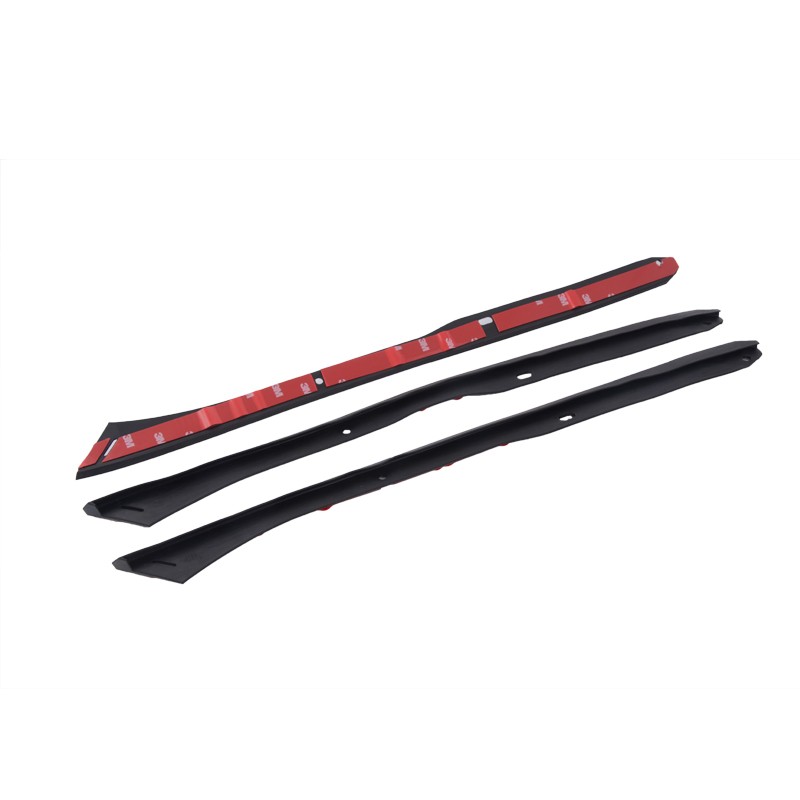
Assembly Efficiency Comparison:
Liquid CIPG (Cure-in-Place Gasket) | 3 (Clean, Dispense, Cure) | 10-30 Minutes | Inconsistent bead width, messy overflow. |
Adhesive Rubber Strip | 1 (Peel & Stick) | 0 Minutes (Instant Handling) | Minimal. consistent profile geometry. |
Beyond just lamps, these adhesive strips are proving versatile in reducing NVH (Noise, Vibration, and Harshness) between body panels, further justifying their cost.
A critical, often overlooked trend in automotive lighting rubber is the issue of "outgassing" or "fogging."
As headlamps become hotter and more sealed, volatile organic compounds (VOCs) released by inferior rubber materials can vaporize. When these vapors hit the cool lens of the headlight, they condense, creating a permanent milky haze on the inside of the glass. This is not water moisture; it is chemical residue.
Leading manufacturers are now demanding Low-VOC EPDM. Through post-curing processes (baking the rubber after molding) and cleaner chemical additives, modern rubber parts minimize these emissions.
Furthermore, sustainability mandates are pushing for higher percentages of recyclable materials. While thermoset rubbers (like standard EPDM) are difficult to recycle, the industry is experimenting with Thermoplastic Vulcanizates (TPVs). TPVs offer the sealing properties of rubber but the processing ease and recyclability of plastics. This transition allows manufacturers to meet stringent EU and global environmental standards without sacrificing the protective qualities needed for sensitive electronics.
The evolution of rubber components in automotive lighting is a direct response to the increasing complexity of the vehicles themselves. We are moving away from passive gaskets toward active thermal management tools and precision-engineered seals that define the longevity of the car's most expensive components. Whether it is the heat-resistant ventilation hose, the high-pressure guard plug, or the rapid-assembly adhesive strip, these parts represent the intersection of chemical engineering and practical manufacturing. As lighting systems continue to integrate cameras and sensors for autonomous driving, the reliance on these high-performance barriers will only deepen, making rubber science a cornerstone of future mobility safety.

// Get Latest Company News
Newsletter Subscription